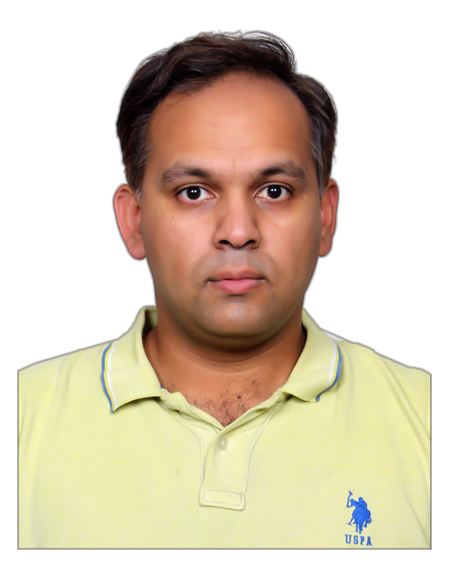
Arvind Ganesh Balasubramanian
Engineering Leader · Machine Learning
-
Roblox 2026 – PresentEngineering Manager Leading Ranking & Personalization for the Avatar Marketplace.
-
Uber 2024 – 2025Tech Lead Manager Building enterprise search and LLM-powered productivity tools.
-
Google 2014 – 2024Software Engineer & Tech Lead
- Personal video search and the Action Moments GIF feature on Google Photos.
- ML pipelines for ranking and moderating user-uploaded imagery on Google Maps.
- Multimodal models rating ad creative quality on the Discover Feed.
- LLM-based tools assisting developers with large-scale code migrations in Search.
-
Baarzo 2013 – 2014Founding ML Engineer Video search startup acquired by Google in 2014.
-
IBM Research 2012 – 2013Research Scientist Data clustering and imputation with partial information. Applied it to build tool to aid customer care reps with issue resolution as they gather new info from customers.
-
University of Illinois, Urbana-Champaign 2006 – 2012Ph.D., Electrical & Computer Engineering Low-rank matrix recovery methods in computer vision. Advisor: Prof. Yi Ma
-
Indian Institute of Technology, Madras 2001 – 2006B.Tech & M.Tech, Electrical Engineering
Arvind Ganesh Balasubramanian is an Engineering Manager at Roblox, where he has led the Ranking and Personalization team for the Avatar Marketplace since January 2026.
Arvind is an experienced engineering leader with deep expertise in machine learning, computer vision, and applied AI. He spent a decade at Google across a range of high-impact roles. He built ML pipelines for parsing and moderating user-uploaded imagery on Google Maps, developed multimodal models to assess ad creative quality on Discover Feed, and led the development of LLM-based tools to assist developers with large-scale code migrations. Earlier at Google, he worked on personal video search for Google Photos, deploying multiple models that significantly improved recall and grew query volume, and proposed the Action Moments feature for capturing interesting moments from videos as shareable GIFs. Before joining Google, he was a founding engineer at Baarzo, a video search startup that was acquired by Google in 2014. He also spent a brief stint as a Tech Lead Manager at Uber, building enterprise search and LLM-powered productivity tools.
Arvind holds a Ph.D. in Electrical and Computer Engineering from the University of Illinois, Urbana-Champaign, and a B.Tech & M.Tech in Electrical Engineering from IIT Madras. His doctoral research on robust face recognition was featured in Wired for achieving state-of-the-art recognition accuracy. He is a Senior Member of the IEEE and a named inventor on two US patents in the areas of video understanding and synthesis.
Publications
Patents
US Patent No. 10,740,620 · Filed 2017-10-12 · Granted 2020-08-11 · Assignee: Google LLC
US Patent No. 10,410,060 · Filed 2017-12-14 · Granted 2019-09-10 · Assignee: Google LLC
Book Chapters
Compressed Sensing: Theory and Applications, Cambridge University Press, 2012
Doctoral Thesis
Thesis Advisor: Prof. Yi Ma
Thesis Committee: (Late) Prof. Thomas Huang, Prof. Olgica Milenkovic, Prof. Sean Meyn
Journal Articles
IEEE Transactions on Image Processing, vol. 22, pp. 3234–3246, 2013
Information and Inference: A Journal of the IMA, vol. 2, pp. 32–68, 2013
IEEE Transactions on Pattern Analysis and Machine Intelligence, vol. 34, pp. 2233–2246, 2012
International Journal of Computer Vision, vol. 99, pp. 1–24, 2012
IEEE Transactions on Pattern Analysis and Machine Intelligence, vol. 34, pp. 372–386, 2011
IEEE Transactions on Pattern Analysis and Machine Intelligence, vol. 31, pp. 210–227, 2008
Conference Papers
Asian Conference on Computer Vision (ACCV), 2010, pp. 314–328
IEEE International Symposium on Information Theory (ISIT), 2012, pp. 1281–1285
IEEE International Conference on Image Processing (ICIP), 2010, pp. 1849–1852
Asian Conference on Computer Vision (ACCV), 2010, pp. 703–717
IEEE International Symposium on Information Theory (ISIT), 2010, pp. 1513–1517
Advances in Neural Information Processing Systems (NeurIPS), vol. 22, 2009
IEEE International Workshop on Computational Advances in Multi-Sensor Adaptive Processing (CAMSAP), 2009, pp. 213–216
IEEE International Conference on Acoustics, Speech and Signal Processing (ICASSP), 2009, pp. 3141–3144
IEEE International Conference on Automatic Face & Gesture Recognition (FG), 2008, pp. 1–8